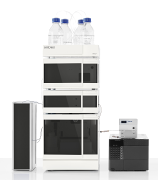
Monolithic supports represent a new era of chromatographic separation. Due to their large inner channel diameter and convective mass transfer, CIM® supports offer excellent separation power, exceptional chemical stability and flow characteristics especially for large biomolecules (pDNA, viruses, monoclonal antibodies).
Definition of Chromatographic Monoliths - the 4th Generation of Stationary Phases:
Monoliths are continuous stationary phases that are cast as a homogeneous column in a single piece and prepared in various dimensions with agglomeration-type or fibrous microstructures. (Iberer, G., Hahn, R., Jungbauer, A. LC-GC, 1999, 17, 998)
CIM® Monolithic Supports are based on:
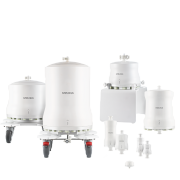
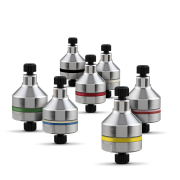
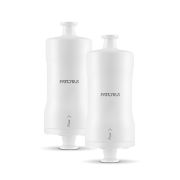
Convective Interaction Media® columns are available as CIM® Disk Monolithic Columns and CIM® Tube Monolithic Columns. They use different flow direction principles: axial flow and radial flow respectively. Since monoliths are flow independent, the resolution and scalability on a radial monolithic column is equal to that of an axial monolithic column despite a significant upgrade in linear velocity through the monolithic bed due to the cylinder’s thickness.
CIM Convective Interaction Media® Disk Monolithic Columns are mainly intended for fast analyzes, in-process control, and laboratory purification. They exhibit low backpressure, even at very high flow rates. In this way, the purification time can be significantly decreased, resulting in a pronounced reduction in downstream processing costs.
CIM® Tube Monolithic Columns (ready-to use) are mainly intended for pilot and industrial cGMP production. They have the same performance characteristics as CIM® Disks but have a different geometry and the housing design forces the liquid to flow in a radial direction.